
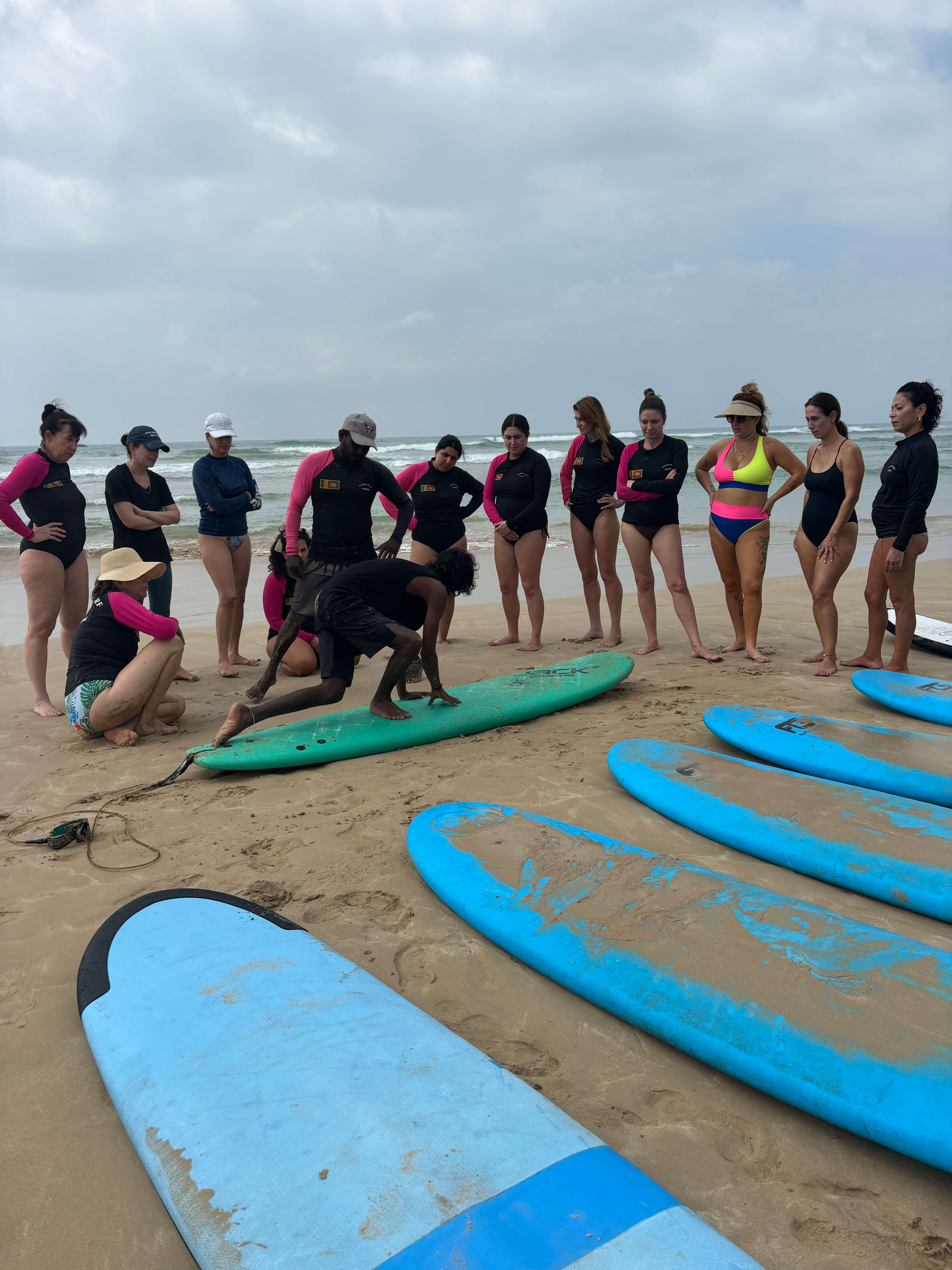
Planning a retreat is an exciting journey, but also one where it is easy to get stuck if you do not arrive prepared for the challenges it brings. These common mistakes cost time, money, and sometimes damage exactly the experience you wanted to create."
Here are a few points we focus on in order to prevent these mistakes and create a successful retreat exactly as intended: smooth, experiential, and free of unwanted surprises.
Insufficient logistical planning
Logistics are the foundation everything else stands on. When they are not organized, participants feel it even if they do not know why.
Location: Is access convenient? Is the hotel suited to the group and to the atmosphere we wanted to create? Is the food good? Are the rooms spacious and suitable for people who do not know one another?
Equipment: Mats, sports equipment, sound system, air conditioning. Check that everything is there and works properly before everyone arrives.
Transportation: How do participants arrive and how do they return, without surprises and without "we will figure it out when we get there"? Is there enough room in the transfer for all the suitcases and equipment?
Content that does not speak to your group
The most beautiful retreat will not succeed if the content does not fit the people in the room. Before building a program, get to know the audience.
Who are the participants? Age, background, previous experience. All of these affect what will work.
Balance between physical activity, inner work, or additional attractions. Not too much of any one thing, and not too little.
Poor time management
A retreat that is too packed is one of the easiest things to create and one of the things that hurts the experience most. People need space to process, rest, and be.
Build a flexible schedule that leaves room for delays and unexpected issues.
Breaks are part of the experience, not an interruption to it. Rest is an activity in itself.
Lack of communication
Participants who arrive with unmanaged expectations, or who do not feel seen during the retreat, disconnect from the experience. Good communication starts long before the retreat and continues after it.
Share the goals, schedule, and what awaits them with participants in advance.
During the retreat, be open to questions and feelings that arise in real time.
At the end of the retreat, collect feedback. What worked? What can be improved? That is what turns one retreat into the foundation for the next.
The same principle is also true between the content side and the production side. The more open the communication between you is before, during, and after, the more complete the retreat feels.
Be prepared for the unexpected
Even the most carefully planned retreat can encounter surprises. That is not a failure of planning, it is simply reality.
A first aid kit is mandatory. Not "recommended": mandatory.
Make sure there is someone on the team who knows how to handle technical and logistical problems in real time, without the participants feeling anything.
Prepare the team also for complaints and requests that come up from participants during the retreat. A quick and warm response.
Additional tips
Make sure the team knows one another before the retreat. A team that works in sync feels completely different.
Keep a digital backup of all retreat details. Always.
Hold an introductory meeting with all participants.
Send the schedule to the hotel, make sure you have a contact person who helps you, and synchronize all suppliers for the next day.
Good planning is not an exact science, but with attention to the right details, your retreat can be exactly what you imagined.