
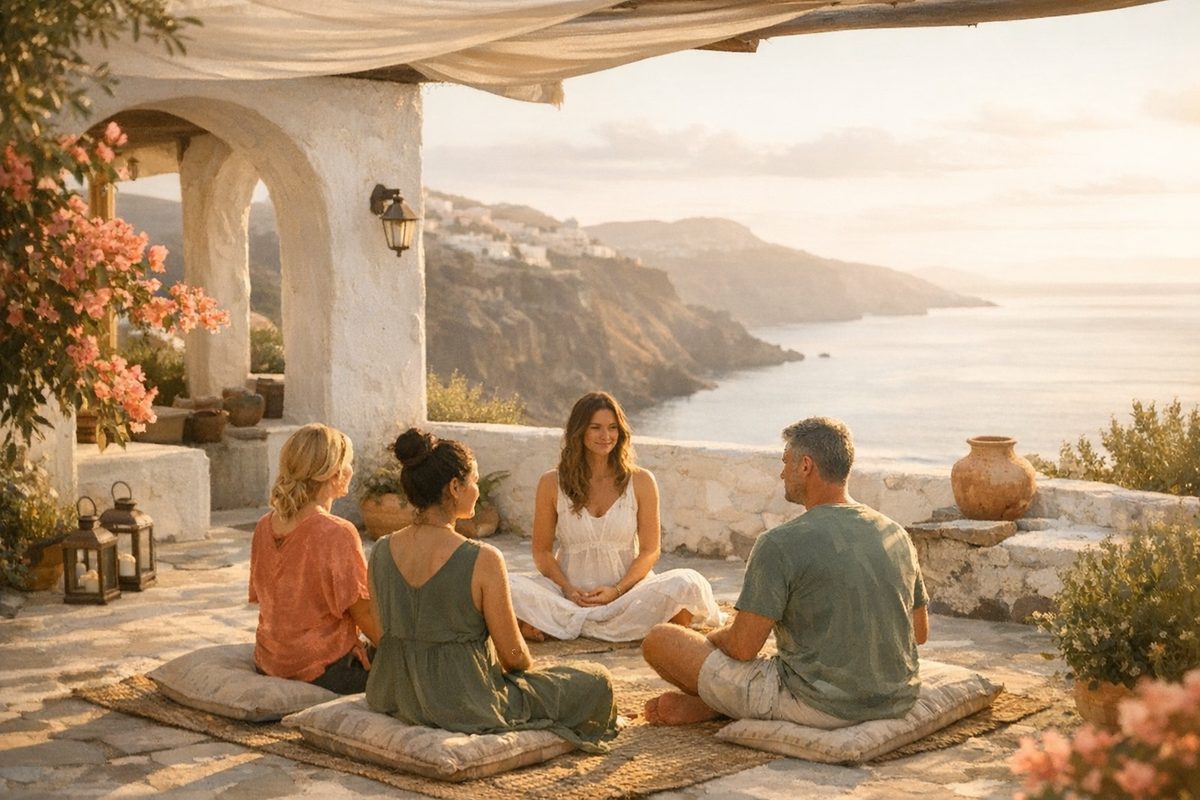
How to choose a location for a yoga retreat
Choosing a location for a yoga retreat is about much more than finding “a beautiful place.” It shapes the rhythm of the days, the participants’ experience, and how easy or complex it will be for you to hold the work you’re bringing.
When you choose well, the place doesn’t just host the retreat — it actively supports it.
Start with the purpose of the retreat
Before talking about views, rooms, or food, pause and ask: what kind of retreat do you want to create?
The location should grow out of your intention:
- a quiet, inward retreat
- a retreat centered on movement and energy
- a deep-dive retreat for a small group
- a retreat for an organization that needs a clear, comfortable structure
Questions to ask in advance
- What should participants feel when they arrive?
- How much practice will there be each day?
- Do you need complete quiet, or can the space feel more open and alive?
- Is connection to nature important, or are comfort and accessibility the priority?
- Is this a group that already knows retreats, or a group that needs more softness and ease?
When the vision is clear, it becomes much easier to filter out places that aren’t truly right — even if they look great on paper.
The practice space: the heart of the retreat
In a yoga retreat, the practice space is not a technical detail. It’s the center.
It needs to let participants settle in, breathe, move comfortably, and feel safe. Sometimes a place looks wonderful in photos, but in reality the studio is too small, too hot, or too noisy.
What to check in the practice space
- Is there enough room for all participants, with mats and real space to move
- Is the floor suitable for practice
- Is the space covered, air-conditioned, or ventilated according to the season
- How quiet is the space
- Is the lighting pleasant, and can you create the right atmosphere
- Is the space available during the hours you need, without depending on other guests
If you’re practicing outdoors
Practicing in nature can be wonderful, but it’s important to check:
- wind
- direct sun
- background noise
- privacy
- a backup plan in case the weather changes
A good yoga retreat venue is one where the practice feels natural, not forced.
Quiet, energy, and surroundings
Not every quiet place is the right fit, and not every beautiful place is actually suitable for a retreat.
The location should support the quality of energy you want to create. There’s a real difference between a luxury villa, a farm in nature, a boutique hotel, or a secluded retreat center. Each one creates a different feeling.
Pay attention to the surroundings
- Is there noise from a road, neighbors, or nearby events
- Does the place feel private
- Is nature truly accessible, or just “a nice view”
- Are there areas for sitting, writing, resting, and conversation
- Will participants feel held and at ease in the space
Sometimes a simpler place, with the right atmosphere and real quiet, works far better than somewhere impressive and beautifully designed.
Logistics are part of the experience
One thing we see again and again: a great location is not just a place with a good vibe, but a place that works well.
When logistics are well set up, you can stay with the group. When they’re not, your energy gets pulled into managing details.
Practical things to check
- Reasonable travel distance for your audience
- Access by private car or shuttle
- Parking
- Room arrangements that fit the group
- Enough showers and bathrooms
- Food that suits participants’ needs
- Seating areas, shared spaces, and quiet corners
- Availability of the venue staff
- Flexibility around check-in and check-out times
Just as important: fit for your group
An intimate group of 12 participants needs a completely different place than a retreat for 40 people or a corporate retreat.
It’s worth checking:
- Does the place feel full and pleasant with your group size
- Is there enough privacy
- Is there a good balance between togetherness and alone time
- Does the hosting level match participants’ expectations
Work with a place that understands retreats
There’s a big difference between a beautiful venue and one that truly knows how to host a retreat.
A place that understands this world will know why quiet matters at certain hours, why the practice space needs to be genuinely available, and why flexibility and attention to small details matter so much.
Good signs that a venue is the right fit
- Communication is clear and pleasant
- You get precise answers, not vague ones
- There is transparency about what is included and what isn’t
- The team understands the needs of teachers and groups
- There is willingness to think with you about the flow of the retreat
Very often, this is what makes the difference between a smooth, well-held retreat and an exhausting production.
Quick tips before you book
Don’t book based on photos alone
Good photos don’t tell the whole story. If possible, it’s always better to visit and see the place in person.
Ask for everything in writing
What’s included, what isn’t, hours, equipment, rooms, cancellation policy, noise restrictions — all of it.
Check the venue through the participant’s eyes
How will it feel to arrive? To sleep? To practice? To eat? To rest?
Leave room for the unexpected
It’s always worth choosing a location that offers flexibility, breathing room, and backup solutions.
In the end, the place should hold you
A good yoga retreat location is one that fits the content, the people, and the pace you want to create. Not just beautiful, but precise. When there is real alignment between the place and the retreat, everything feels simpler — and both you and your participants have more space to be fully in the experience.